Principles Of Lean Software Development
Struggling with Bloated Development? Master the 7 Principles Of Lean Software Development
Hey there! If you've ever felt like your software development process is moving too slowly, burdened by unnecessary meetings, or delivering features nobody actually uses, you are certainly not alone. The complexity of modern tech demands a smarter, faster, and much leaner approach.
Enter Lean Software Development (LSD). Derived from the revolutionary Toyota Production System (TPS), Lean isn't just a methodology; it's a philosophy focused on maximizing customer value while minimizing waste.
In this comprehensive guide, we're going to dive deep into the very core of this philosophy: the fundamental Principles Of Lean Software Development. We will explore exactly what each principle means and how you can start applying these game-changing concepts to your projects today.
What is Lean Software Development and Why Does it Matter?
Lean Software Development was formally introduced to the IT world by Mary and Tom Poppendieck. They adapted the manufacturing wisdom of Lean thinking—which focuses heavily on flow, pull, and value stream mapping—specifically for software creation.
In essence, Lean development focuses on two major areas: speed and quality. By identifying and ruthlessly eliminating anything that doesn't add value to the end product, teams can deliver features faster, react to feedback quicker, and ultimately build better software.
The Benefits of Adopting Lean Principles
- Improved Time-to-Market: Delivering small, validated increments rapidly.
- Higher Quality: Integrating quality checks throughout the process, not just at the end.
- Reduced Costs: Less time spent on irrelevant features or rework.
- Better Team Morale: Empowered teams that have ownership over their work.
If you aim for sustainable speed without compromising your product's integrity, understanding the Principles Of Lean Software Development is non-negotiable.
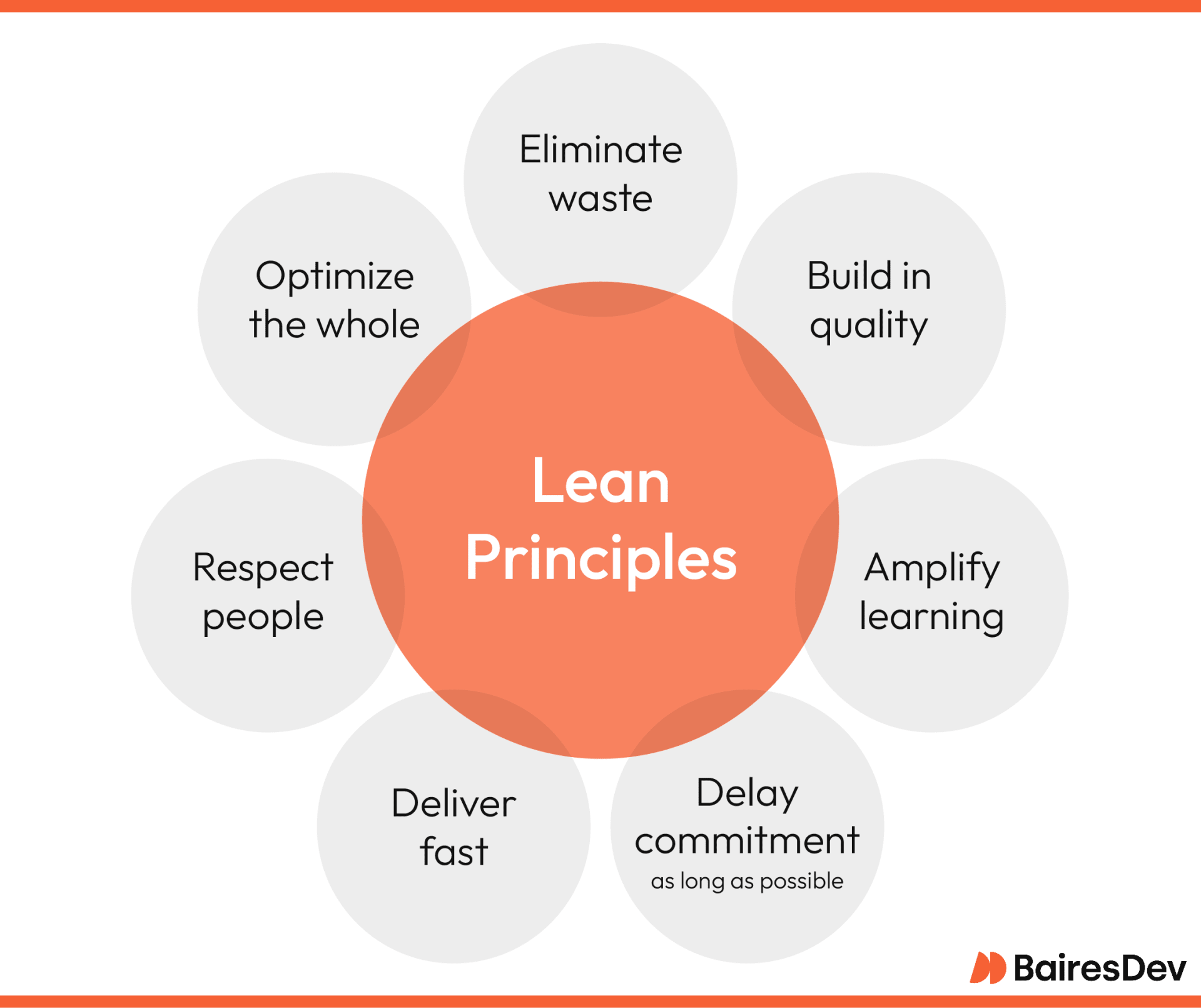
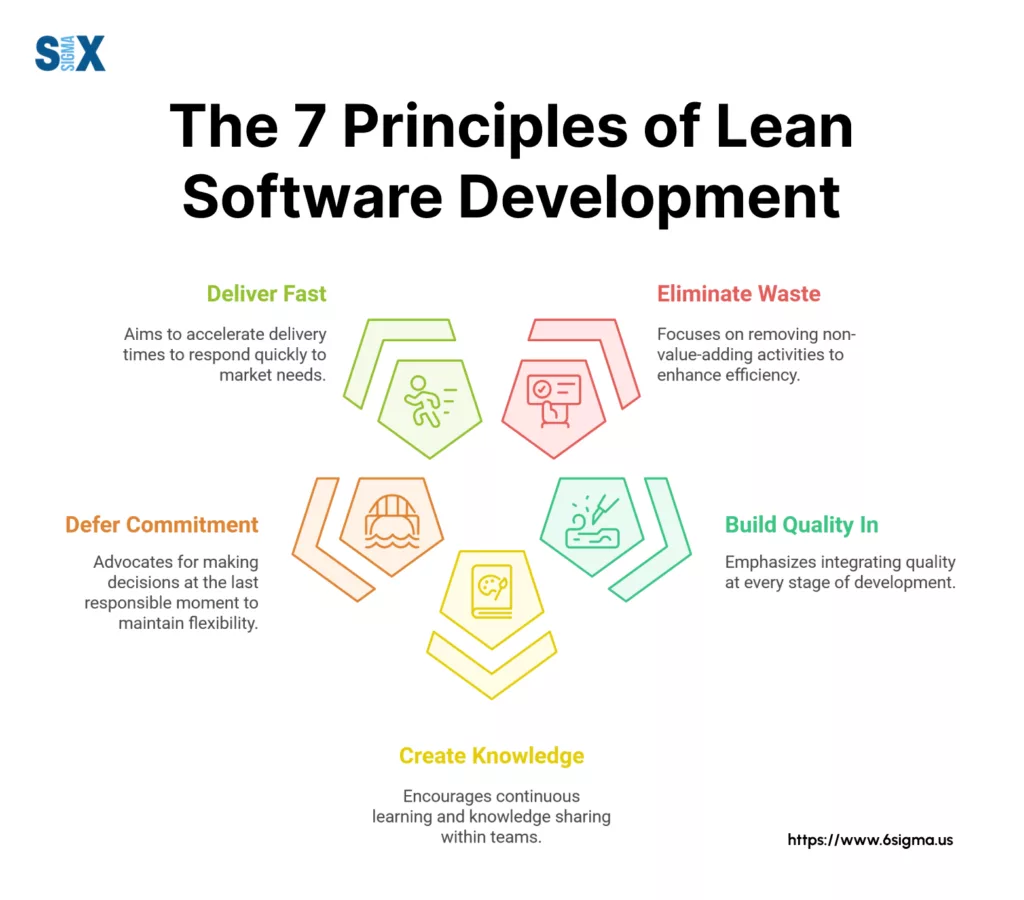
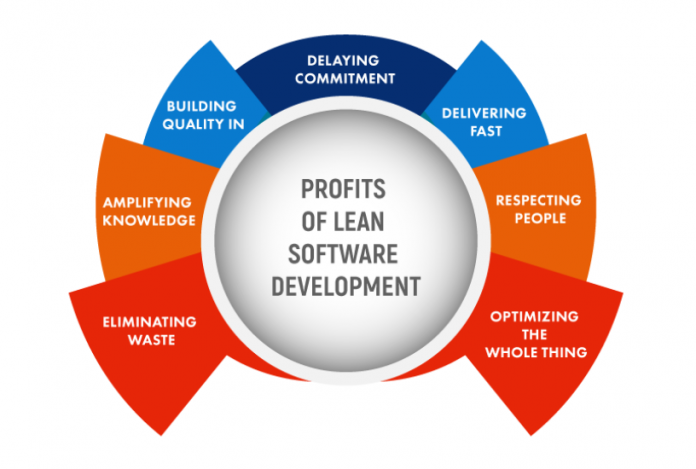
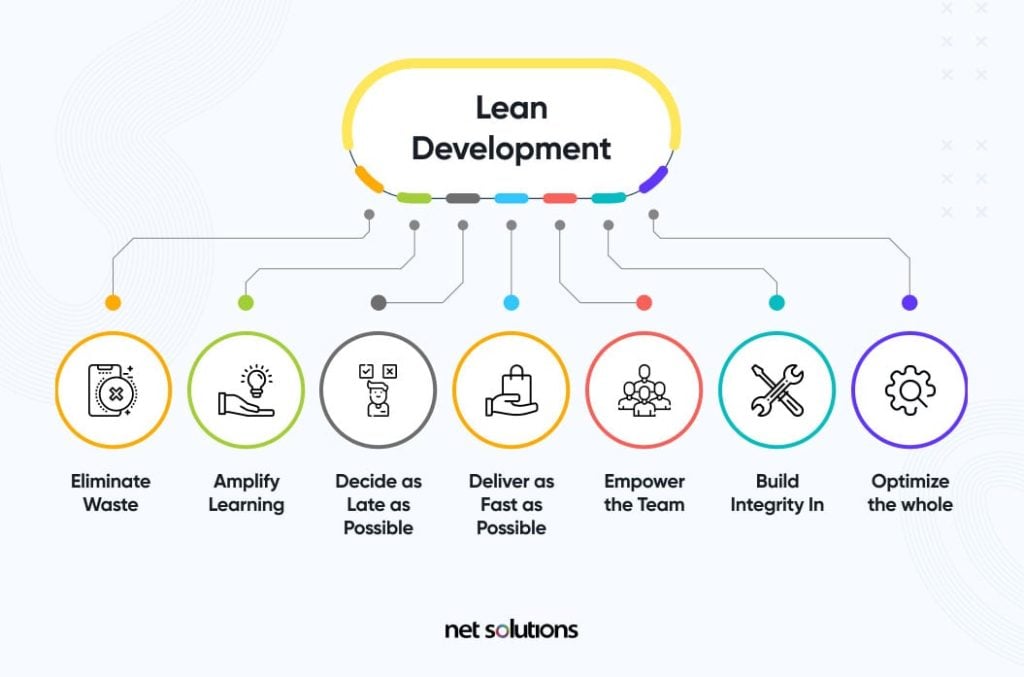
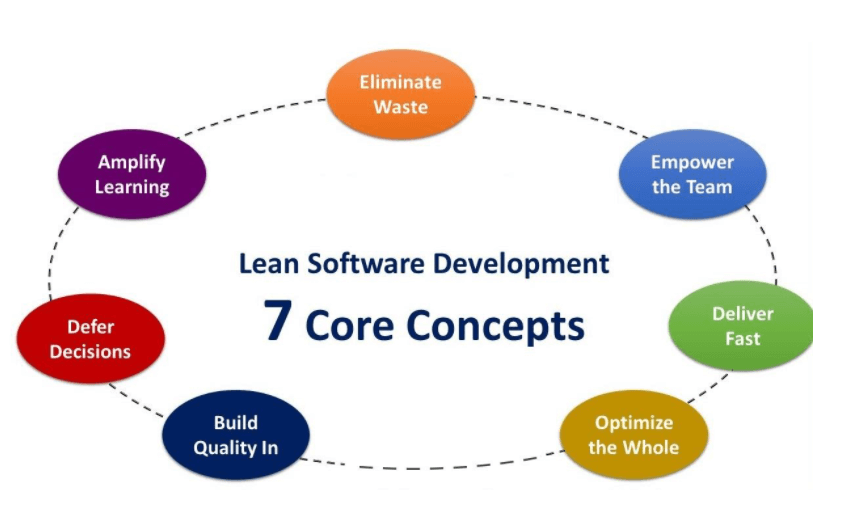
The Core 7 Principles Of Lean Software Development
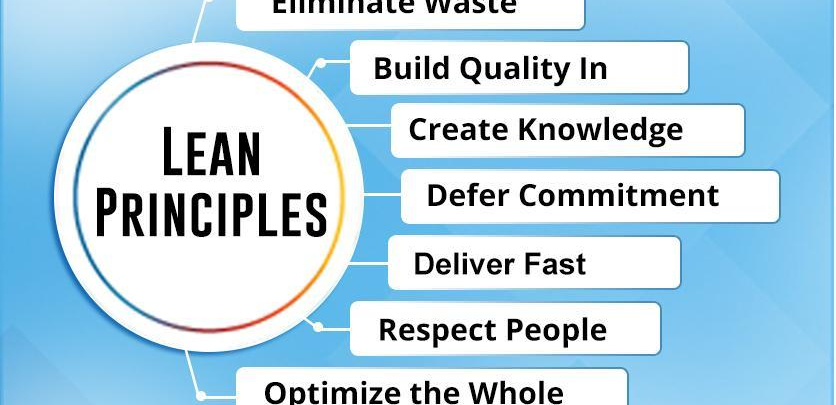
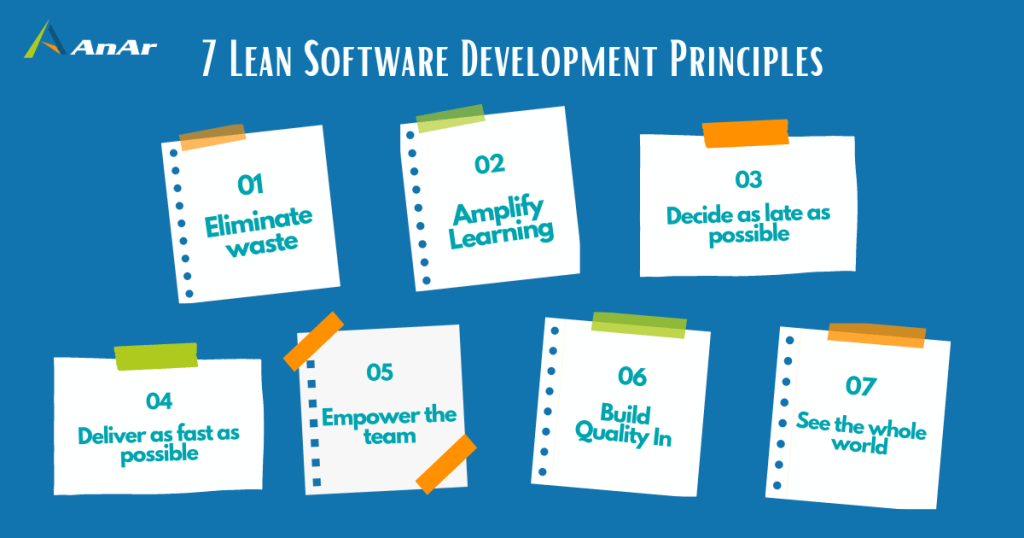
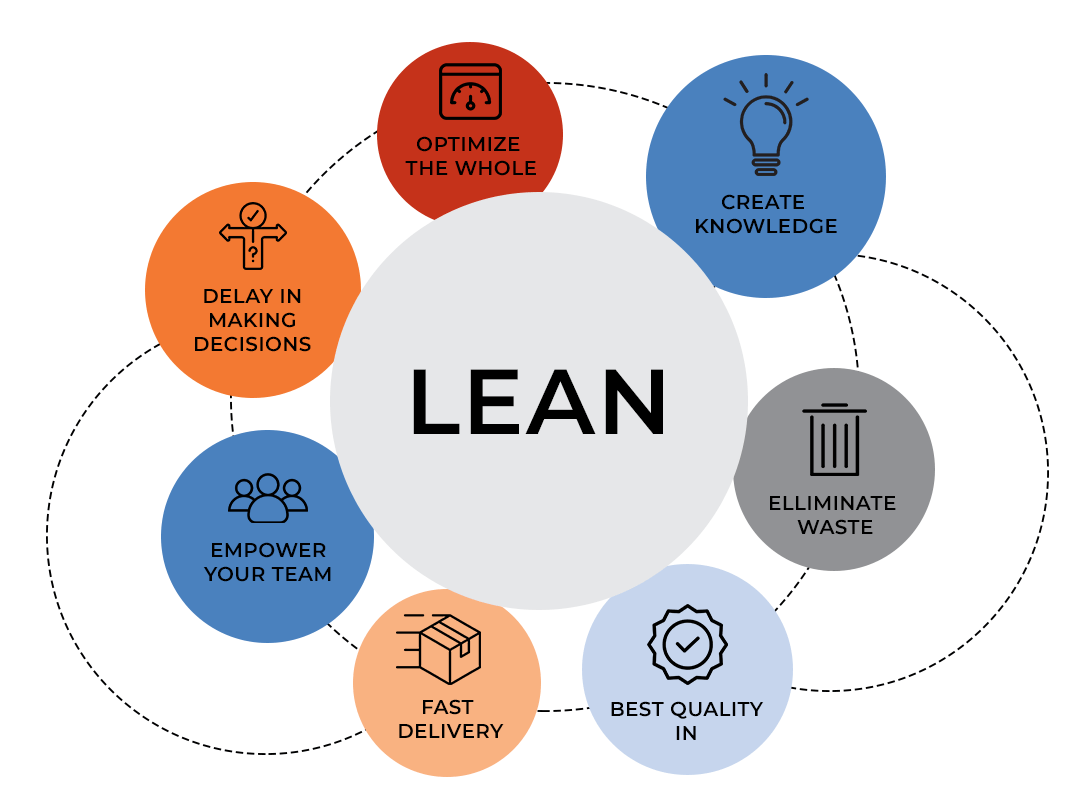
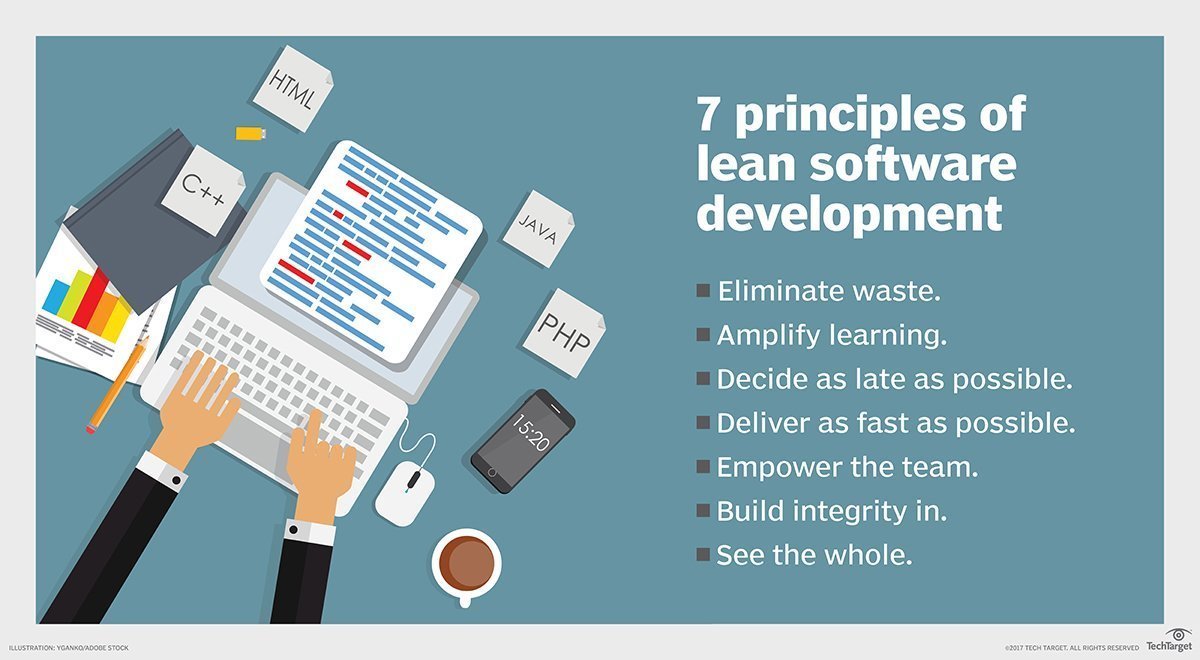
These seven principles form the backbone of the Lean methodology. They are interconnected and must be practiced synergistically to achieve truly "Lean" results.
1. Eliminate Waste (Muda)
This is arguably the most famous principle derived directly from the manufacturing line. In software, "waste" (or Muda) is anything that consumes resources but doesn't add value to the customer.
Common wastes include:
- Partially done work (inventory).
- Extra features nobody uses (over-processing).
- Excessive documentation or handoffs.
- Task switching and delays (waiting).
- Defects and bugs (rework).
The goal is to continuously review your workflow, identify these wastes, and implement strategies to remove them. The concept of Muda applies to both code and process.
2. Amplify Learning
In complex systems like software development, certainty is rare. Lean recognizes that the greatest risk isn't failure; it's building the wrong thing efficiently. Therefore, development is viewed as a continuous learning loop.
This means prioritizing validated learning over simple feature deployment. Techniques like Test-Driven Development (TDD), frequent integration, and short feedback cycles are essential for amplifying learning and course-correcting quickly.
3. Decide as Late as Possible (Set-Based Design)
This principle champions flexibility. It emphasizes keeping critical decisions open until the last responsible moment (LRM).
Why? Because the later you decide, the more information you have. Committing too early often locks you into a suboptimal path. Using practices like set-based design—where you explore multiple technical options simultaneously before settling on one—helps maintain agility.
Practical Tip: Avoid coding highly specialized interfaces or integrations until the actual requirements from dependent teams or market research are crystal clear. Delaying commitment is not delaying work; it's delaying specialization.
4. Deliver as Fast as Possible
Speed isn't just about finishing code quickly; it's about shortening the time from concept inception to customer hands. Faster delivery provides faster feedback, which circles back to amplifying learning (Principle #2).
This principle necessitates reducing batch sizes—working on smaller user stories instead of huge feature sets—and leveraging automation tools like Continuous Integration/Continuous Deployment (CI/CD).
If you want to speed up your workflow, read more about managing flow here: [Baca Juga: Value Stream Mapping in Software]
5. Empower the Team (Respect for People)
The concept of "Respect for People" is central to Lean. It recognizes that the people doing the work are often the best source of solutions and improvements. Command-and-control management structures stifle innovation.
Empowering teams means:
- Giving them authority over their processes.
- Fostering a culture where raising issues is encouraged (like the 'Andon cord' in TPS).
- Providing the necessary tools and training.
This respect builds trust and ownership, leading to higher quality outputs.
6. Build Integrity In
In software, integrity goes beyond mere functional correctness. It involves two types of integrity:
H4. Perceived Integrity (Customer Experience)
Does the software look and feel right? Is the UX intuitive? This focuses on the external quality the user experiences.
H4. Conceptual Integrity (Technical Quality)
Is the code base clean, consistent, and maintainable? This is internal quality—clean architecture, automated tests, and minimal technical debt. Neglecting conceptual integrity today guarantees waste (rework) tomorrow.
For more detailed information on technical quality, see the discussion on system architecture at ISO standards for Systems and Software Engineering.
7. See the Whole (System Thinking)
The final principle insists that optimizing individual parts rarely optimizes the whole. Development teams must understand their software within the context of the entire organization, the business value chain, and the end-user experience.
Focusing purely on optimizing a single feature or team without considering the downstream implications (deployment, operations, support) will inevitably lead to bottlenecks elsewhere. This encourages cross-functional cooperation and holistic process improvement.
Read more about the system perspective here: [Baca Juga: Understanding Toyota Production System]
Comparing Lean vs. Traditional Software Methodologies
While many companies operate under hybrid models (often blending Agile with Lean principles), it helps to see how Lean philosophy contrasts with rigid, traditional approaches like Waterfall.
| Feature | Lean Software Development | Traditional (Waterfall) |
|---|---|---|
| Focus | Maximizing flow and eliminating waste (value focus). | Strict adherence to predefined plan (scope focus). |
| Decision Making | Decide as late as possible; data-driven. | Decisions made up-front during planning phases. |
| Feedback Loops | Continuous and rapid; short cycles. | Late and infrequent (usually after integration). |
| Team Structure | Empowered, autonomous, cross-functional teams. | Hierarchical, specialized functional teams. |
Conclusion: Achieving Sustainable Software Excellence
The Principles Of Lean Software Development offer a powerful blueprint for organizations aiming for agility, quality, and speed. They shift the focus from merely managing tasks to optimizing the entire value stream.
It's important to remember that Lean is not a rigid process checklist; it is a mindset rooted in continuous improvement (Kaizen) and respect for the people who execute the work. By consistently applying these seven principles, your team can build software that truly meets customer needs—without the usual accompanying frustration and bloat.
Frequently Asked Questions (FAQ) About Lean Software Development
Is Lean Software Development the same as Agile?
No, but they are highly compatible. Lean is a philosophy focused on efficiency (eliminating waste), while Agile is a set of values and practices focused on adaptation and iterative delivery. Many Agile frameworks (like Scrum) benefit greatly when viewed through a Lean lens, particularly regarding flow and waste reduction.
Where does the concept of "pull" fit into Lean Software Development?
The "pull system" dictates that work should only begin when there is actual demand for it downstream. In software, this means limiting Work In Progress (WIP). Teams only "pull" the next task when they have capacity, preventing bottlenecks and ensuring focus. Kanban boards are often used to implement this pull system effectively.
What is the biggest challenge when adopting Lean principles?
The biggest hurdle is typically cultural, not technical. Lean requires a shift in management mindset—moving from micromanagement to empowering teams, and from optimizing utilization (keeping everyone busy) to optimizing flow (getting work done quickly). Resistance to change and difficulty in identifying "waste" are common initial obstacles.
How can we measure success using Lean principles?
Key Lean metrics focus on flow and quality, such as: Lead Time (how long it takes from idea to delivery), Cycle Time (time spent on an active task), Throughput (how many items are completed per period), and Defect Rate (to measure built-in quality).
Principles Of Lean Software Development
Principles Of Lean Software Development Wallpapers
Collection of principles of lean software development wallpapers for your desktop and mobile devices.

Detailed Principles Of Lean Software Development Wallpaper Nature
Explore this high-quality principles of lean software development image, perfect for enhancing your desktop or mobile wallpaper.
Spectacular Principles Of Lean Software Development Capture Photography
Find inspiration with this unique principles of lean software development illustration, crafted to provide a fresh look for your background.

Exquisite Principles Of Lean Software Development Moment Concept
This gorgeous principles of lean software development photo offers a breathtaking view, making it a perfect choice for your next wallpaper.
Beautiful Principles Of Lean Software Development Capture Photography
Explore this high-quality principles of lean software development image, perfect for enhancing your desktop or mobile wallpaper.
Serene Principles Of Lean Software Development View for Desktop
Transform your screen with this vivid principles of lean software development artwork, a true masterpiece of digital design.

High-Quality Principles Of Lean Software Development Scene Illustration
Transform your screen with this vivid principles of lean software development artwork, a true masterpiece of digital design.
Spectacular Principles Of Lean Software Development Abstract Nature
Find inspiration with this unique principles of lean software development illustration, crafted to provide a fresh look for your background.
Exquisite Principles Of Lean Software Development Picture for Your Screen
Find inspiration with this unique principles of lean software development illustration, crafted to provide a fresh look for your background.

Spectacular Principles Of Lean Software Development View Photography
Immerse yourself in the stunning details of this beautiful principles of lean software development wallpaper, designed for a captivating visual experience.
Detailed Principles Of Lean Software Development Landscape Illustration
Discover an amazing principles of lean software development background image, ideal for personalizing your devices with vibrant colors and intricate designs.

Breathtaking Principles Of Lean Software Development Design for Your Screen
Transform your screen with this vivid principles of lean software development artwork, a true masterpiece of digital design.
Dynamic Principles Of Lean Software Development Design Art
Immerse yourself in the stunning details of this beautiful principles of lean software development wallpaper, designed for a captivating visual experience.

High-Quality Principles Of Lean Software Development Design for Desktop
Experience the crisp clarity of this stunning principles of lean software development image, available in high resolution for all your screens.
Beautiful Principles Of Lean Software Development Capture in HD
Explore this high-quality principles of lean software development image, perfect for enhancing your desktop or mobile wallpaper.

Artistic Principles Of Lean Software Development Landscape for Your Screen
A captivating principles of lean software development scene that brings tranquility and beauty to any device.

Dynamic Principles Of Lean Software Development Abstract Art
Immerse yourself in the stunning details of this beautiful principles of lean software development wallpaper, designed for a captivating visual experience.

Dynamic Principles Of Lean Software Development Scene Nature
This gorgeous principles of lean software development photo offers a breathtaking view, making it a perfect choice for your next wallpaper.
Beautiful Principles Of Lean Software Development Photo for Your Screen
Transform your screen with this vivid principles of lean software development artwork, a true masterpiece of digital design.

Dynamic Principles Of Lean Software Development Wallpaper in HD
Immerse yourself in the stunning details of this beautiful principles of lean software development wallpaper, designed for a captivating visual experience.