Internet Of Things Software Development
Unlocking the Future: Essential Guide to Internet Of Things Software Development in 2024
Welcome to the world of connectivity! If you've ever wondered how smart fridges talk to grocery stores, or how massive factories achieve predictive maintenance, the answer lies in robust **Internet Of Things Software Development**. This isn't just about connecting devices; it's about creating an intelligent ecosystem that transforms raw data into real-world action.
Developing IoT solutions is uniquely complex, requiring expertise across embedded systems, cloud computing, data analytics, and high-stakes security. We're here to demystify this process. Grab a coffee, because we are diving deep into the architecture and strategy you need to build the connected world of tomorrow.
The Complex Anatomy of IoT Software Development
Unlike traditional web or mobile applications, IoT systems operate across multiple distinct layers. A successful Internet Of Things software development project requires seamless integration across all these layers, often handled by specialized teams.
The Four Core Layers of Any IoT Solution
To truly understand the software complexity, we must break the system down:
- **The Device Layer (The "Things"):** This involves firmware development, embedded systems programming (C/C++, Python), and optimizing performance for low-power consumption. This is where data originates.
- **The Connectivity Layer (The Network):** This manages communication protocols like MQTT, CoAP, Zigbee, or cellular networks (5G/NB-IoT). The software here ensures secure and reliable data transport, often dealing with intermittent connections.
- **The Platform Layer (The Cloud/Fog):** This is the core engine, often hosted on AWS IoT, Azure IoT Hub, or Google Cloud Platform. It handles data ingestion, processing, device management, and application APIs.
- **The Application Layer (The User Interface):** This is the visible component—the dashboard, mobile app, or enterprise system that consumes the processed data and sends commands back down to the devices.
Ignoring the intricacies of any single layer can lead to massive scalability issues or catastrophic security vulnerabilities down the line.
Deciphering the IoT Tech Stack: From Edge to Cloud
Choosing the right technology stack is perhaps the most crucial decision in **Internet Of Things Software Development**. The choice dictates cost, scalability, and time-to-market. Here is a look at typical components used across the stack:
| Layer Component | Common Technologies / Protocols | Primary Function |
|---|---|---|
| Device OS / Firmware | FreeRTOS, Embedded Linux, Zephyr | Managing hardware resources and sensors. |
| Messaging Protocol | MQTT, AMQP, CoAP | Lightweight, reliable communication over low bandwidth. |
| Cloud Platform | AWS IoT Core, Microsoft Azure IoT Hub, GCP IoT | Data ingestion, device management, security policy enforcement. |
| Data Storage | Time-Series Databases (InfluxDB), NoSQL (Cassandra) | Handling massive volumes of time-stamped sensor data. |
Choosing a managed cloud provider significantly speeds up development, but proprietary solutions offer greater control—a classic build vs. buy decision tailored to your scale and regulatory environment.
The Biggest Challenges in IoT Software Development Today
The vision of IoT is fantastic, but the execution is fraught with technical difficulties. Developers routinely face roadblocks that are unique to the highly distributed nature of connected systems.
Handling Device and Protocol Fragmentation
Imagine building a single application that needs to talk to hundreds of different sensor types, each using a slightly different protocol, hardware manufacturer, or data format. This heterogeneity is the bane of scalable IoT. Standardization remains elusive, forcing developers to build complex normalization layers.
Scalability and Data Tsunami
A simple smart factory can generate terabytes of data daily. The software must be designed from day one to handle this massive throughput (high-velocity data) and simultaneously ensure low latency for real-time applications (e.g., automated safety shutdowns). This often requires adopting stream processing frameworks like Apache Kafka.
For more on scaling large systems, you might find our guide helpful: [Baca Juga: Building Scalable Data Pipelines].
Architecture Deep Dive: Centralized vs. Decentralized IoT
When designing the system, architects must decide where the computation happens. Historically, everything was centralized in the cloud. However, modern industrial and critical IoT systems increasingly rely on decentralized models.
The Rise of Edge Computing
Edge computing pushes processing power closer to the data source (the 'edge'). This is essential for applications requiring near-zero latency, such as autonomous vehicles or remote patient monitoring. The software development shift here means writing application logic that runs reliably on resource-constrained devices, minimizing reliance on constant cloud connectivity.
This approach significantly reduces network congestion and improves reliability, especially in areas with poor internet service. Learn more about the core concepts of running computation closer to the source: Edge Computing on Wikipedia.
Why Fog Computing Bridges the Gap
Fog computing is often utilized as a middle layer—a local gateway or server that aggregates data from numerous devices before transmitting a summarized report to the cloud. This distributes the processing load, making the overall system more resilient and cost-effective, particularly for large-scale industrial IoT (IIoT) deployments.
Why Security Must Be the Core of Your IoT Strategy
IoT devices often operate unsupervised in public or non-secure environments, making them highly attractive targets for cyberattacks. If traditional software development focuses on data security, IoT development must focus on physical security and supply chain integrity as well.
The vast attack surface, spanning physical devices, communication links, and cloud platforms, means security cannot be an afterthought; it must be 'baked in' (Security by Design).
Key Security Measures in IoT Development
Software developers must rigorously implement these measures:
- **Secure Boot & Over-the-Air (OTA) Updates:** Ensuring that only authenticated, cryptographically signed firmware can run on the device and that updates are delivered securely.
- **Device Identity & Authentication:** Every 'Thing' needs a unique, verifiable identity. TLS and X.509 certificates are standard for mutual authentication between device and cloud.
- **Data Encryption:** Encrypting data both "in transit" (via secure protocols like DTLS/TLS) and "at rest" (in cloud databases).
Regulatory bodies are increasingly focusing on this area. Understanding standards like NIST's guidelines is crucial for robust IoT Cybersecurity Development. Furthermore, ongoing research provides new insights into protecting resource-constrained devices: IoT Security Research Journals.
Ignoring weak default passwords, lack of encryption, and poor update mechanisms are the primary reasons large IoT botnets (like Mirai) continue to plague the internet. [Baca Juga: IoT Device Firmware Security]
Conclusion: Ready to Build the Connected World?
Internet Of Things Software Development is challenging, exhilarating, and absolutely essential for the next wave of digital transformation. It demands a holistic approach, where expertise in low-level embedded programming meets the massive scale of cloud architecture and the non-negotiable requirement of top-tier security.
Success lies not just in writing code, but in understanding the end-to-end journey of data—from sensor beep to actionable insight. By mastering the fragmented layers and prioritizing security from the ground up, you are well-equipped to contribute meaningfully to the connected future.
Frequently Asked Questions (FAQ) about IoT Development
- **What programming languages are most common in IoT Software Development?**
For the device (embedded) layer, C and C++ are dominant due to performance and low memory footprint. For the application and cloud layers, Python, Java, Go, and JavaScript (Node.js) are most frequently used for backend services, APIs, and data processing.
- **What is the difference between IoT and IIoT?**
IoT (Internet of Things) refers to consumer-grade devices (smart homes, wearables). IIoT (Industrial Internet of Things) refers specifically to mission-critical industrial applications, such as manufacturing automation, logistics, and predictive maintenance, where reliability and latency requirements are much stricter and stakes are higher.
- **How long does it typically take to develop a functional MVP for a new IoT solution?**
The timeline varies wildly depending on hardware maturity. If custom firmware and hardware are required, development can take 9–18 months. If leveraging existing commercial off-the-shelf (COTS) devices and standard cloud platforms, a Minimum Viable Product (MVP) can often be achieved in 3–6 months.
- **Should I choose a public cloud (AWS/Azure) or build a private platform for my IoT project?**
For most startups and mid-sized enterprises, using a public cloud provider is significantly faster and more cost-effective, offering built-in scalability and robust device management tools. Private platforms are usually reserved for highly regulated industries (defense, critical infrastructure) or those needing absolute control over data sovereignty.
Internet Of Things Software Development
Internet Of Things Software Development Wallpapers
Collection of internet of things software development wallpapers for your desktop and mobile devices.
Crisp Internet Of Things Software Development Abstract in HD
Immerse yourself in the stunning details of this beautiful internet of things software development wallpaper, designed for a captivating visual experience.

Breathtaking Internet Of Things Software Development Picture in 4K
Transform your screen with this vivid internet of things software development artwork, a true masterpiece of digital design.
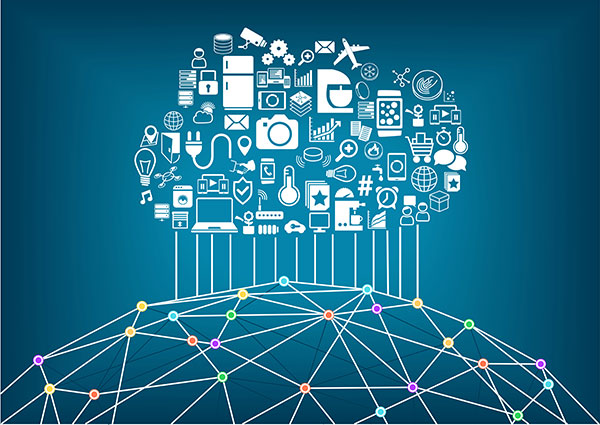
Dynamic Internet Of Things Software Development Design Illustration
Find inspiration with this unique internet of things software development illustration, crafted to provide a fresh look for your background.
Mesmerizing Internet Of Things Software Development Picture Nature
Discover an amazing internet of things software development background image, ideal for personalizing your devices with vibrant colors and intricate designs.

Vivid Internet Of Things Software Development Wallpaper in HD
Experience the crisp clarity of this stunning internet of things software development image, available in high resolution for all your screens.

Lush Internet Of Things Software Development Landscape Photography
This gorgeous internet of things software development photo offers a breathtaking view, making it a perfect choice for your next wallpaper.
Mesmerizing Internet Of Things Software Development Wallpaper for Mobile
Transform your screen with this vivid internet of things software development artwork, a true masterpiece of digital design.

Crisp Internet Of Things Software Development Photo for Your Screen
Immerse yourself in the stunning details of this beautiful internet of things software development wallpaper, designed for a captivating visual experience.

High-Quality Internet Of Things Software Development Artwork for Mobile
Explore this high-quality internet of things software development image, perfect for enhancing your desktop or mobile wallpaper.

Beautiful Internet Of Things Software Development Abstract for Your Screen
Explore this high-quality internet of things software development image, perfect for enhancing your desktop or mobile wallpaper.
Lush Internet Of Things Software Development Wallpaper Collection
A captivating internet of things software development scene that brings tranquility and beauty to any device.
Gorgeous Internet Of Things Software Development Artwork Art
Immerse yourself in the stunning details of this beautiful internet of things software development wallpaper, designed for a captivating visual experience.
Lush Internet Of Things Software Development Design Nature
A captivating internet of things software development scene that brings tranquility and beauty to any device.

Stunning Internet Of Things Software Development Scene in 4K
This gorgeous internet of things software development photo offers a breathtaking view, making it a perfect choice for your next wallpaper.
Spectacular Internet Of Things Software Development Photo Digital Art
Find inspiration with this unique internet of things software development illustration, crafted to provide a fresh look for your background.
Vibrant Internet Of Things Software Development Abstract Photography
Transform your screen with this vivid internet of things software development artwork, a true masterpiece of digital design.
Captivating Internet Of Things Software Development Photo in 4K
Immerse yourself in the stunning details of this beautiful internet of things software development wallpaper, designed for a captivating visual experience.

Lush Internet Of Things Software Development Photo Concept
Find inspiration with this unique internet of things software development illustration, crafted to provide a fresh look for your background.
Captivating Internet Of Things Software Development Abstract in HD
Find inspiration with this unique internet of things software development illustration, crafted to provide a fresh look for your background.
0 Response to "Internet Of Things Software Development"
Post a Comment