How To Get Cumulative Frequency In Statistics
How To Get Cumulative Frequency In Statistics: Your Easy Step-by-Step Guide
If you're diving into statistics, terms like "frequency distribution" and "cumulative frequency" can sometimes sound intimidating. But don't worry! Calculating cumulative frequency is actually one of the most straightforward concepts in data analysis. It simply means keeping a running total of the frequencies as you move through your dataset.
This comprehensive guide will walk you through exactly How To Get Cumulative Frequency In Statistics, breaking down the process into simple, manageable steps. By the end of this article, you'll be able to calculate and interpret cumulative frequencies like a pro, making tricky statistical concepts much clearer.
What Exactly is Cumulative Frequency and Why Does It Matter?
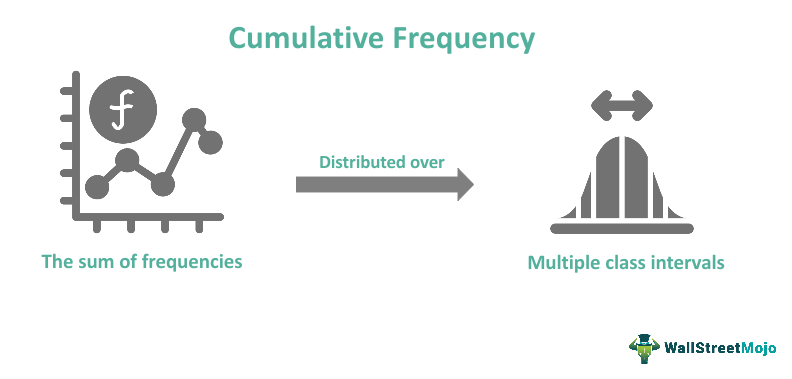
Simply put, cumulative frequency is the sum of the frequencies for a class interval and all the class intervals that came before it. It's an accumulation, or a running total, that tells you "how many data points fall below this specific point."
This measure is incredibly useful because it helps us understand the position of data points within the entire set. Unlike simple frequency, which only tells you how many times a value occurs, cumulative frequency gives you context.
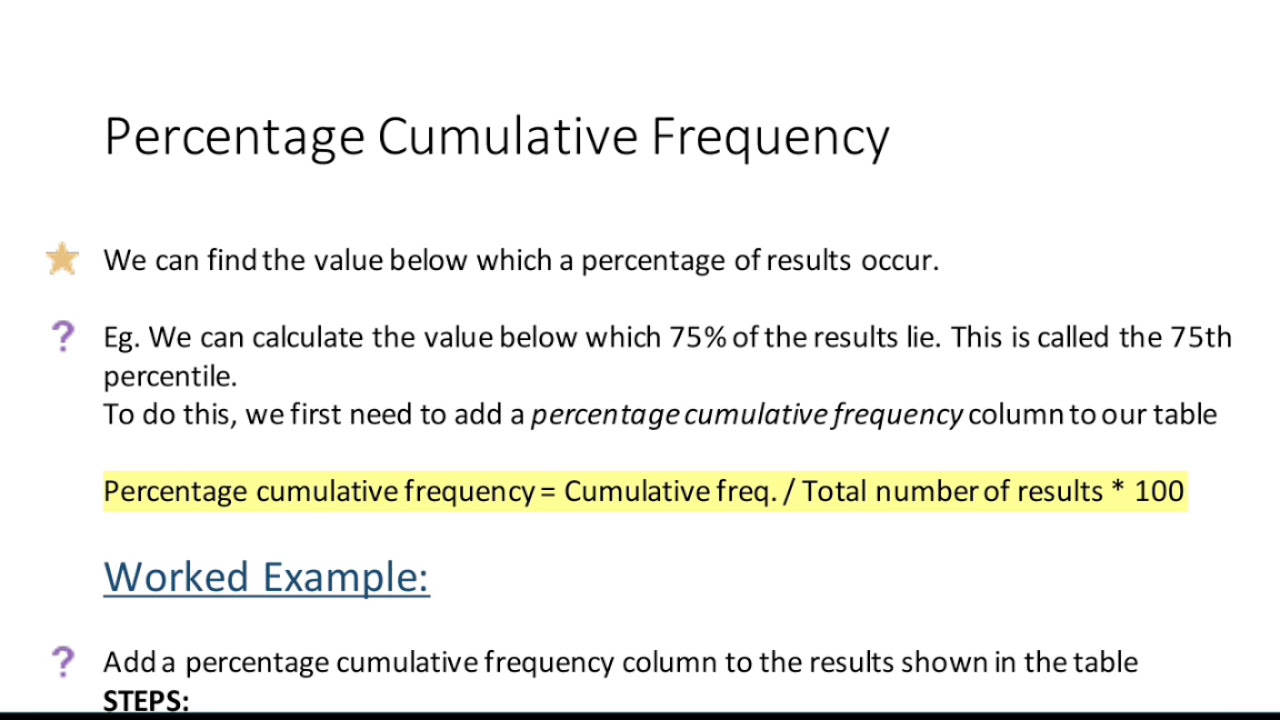
For example, if you are looking at test scores, the cumulative frequency tells you how many students scored below a certain grade. This is essential for calculating percentiles, finding the median, and creating visual representations like the ogive graph.
Prerequisites: Data Organization Before Calculation
Before you can accurately figure out How To Get Cumulative Frequency In Statistics, your data needs to be neat and organized. If your data is messy or unsorted, your resulting cumulative frequencies will be meaningless.
Step 1: Sorting Your Raw Data
If you are working with discrete raw data (individual numbers like 1, 5, 10, 10, 15), your first task is to sort them from the smallest value to the largest. Sorting ensures that when you start counting frequencies, they are in the correct sequential order necessary for accumulation.
If your data set is extremely large, or if the values are continuous (like heights or weights), you'll need to use class intervals. This leads us to the next crucial step.
Step 2: Creating a Frequency Distribution Table
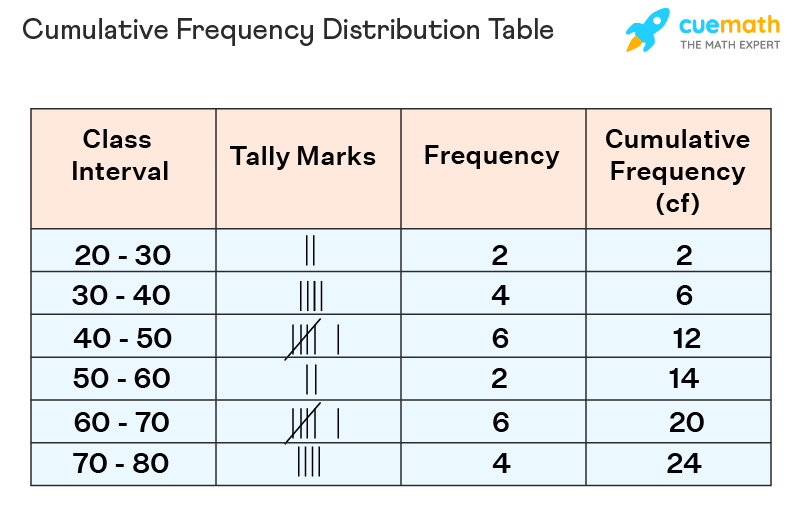
A frequency distribution table is the foundation for calculating cumulative frequency. This table clearly organizes the data into categories (either specific values or class intervals) and notes how often each category occurs.
The standard frequency distribution table needs at least two columns, but for our goal, we will need four columns in total. Here is what your basic table structure should look like:
- Class Interval / Value (X): The range or specific score/value you are counting.
- Tally Marks: Used during manual counting to mark occurrences.
- Frequency (f): The total number of times the value or interval occurs.
- Cumulative Frequency (Cf): This is the column we are focused on calculating.
Remember, the frequency (f) is the bedrock. Make sure the sum of your frequencies equals the total number of observations (N) in your original dataset before proceeding.
How To Get Cumulative Frequency In Statistics: The Calculation Process
Now we get to the core of the operation: filling in that crucial Cumulative Frequency (Cf) column. This process is inherently iterative—each step relies on the result of the previous step. It's like climbing a set of stairs; you add the height of each step to your previous elevation.
Setting Up the Cumulative Frequency Column
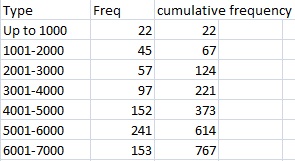
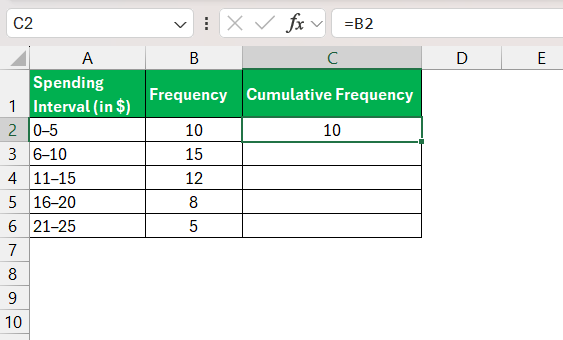
The calculation always starts with the very first class interval or value. For this first row, the cumulative frequency is exactly the same as the regular frequency. You haven't accumulated anything yet, so the running total starts equal to the first frequency.
Let's say the frequency for the first class interval is 5. Your cumulative frequency for the first row is also 5.
The Accumulation Rule: Adding Frequencies
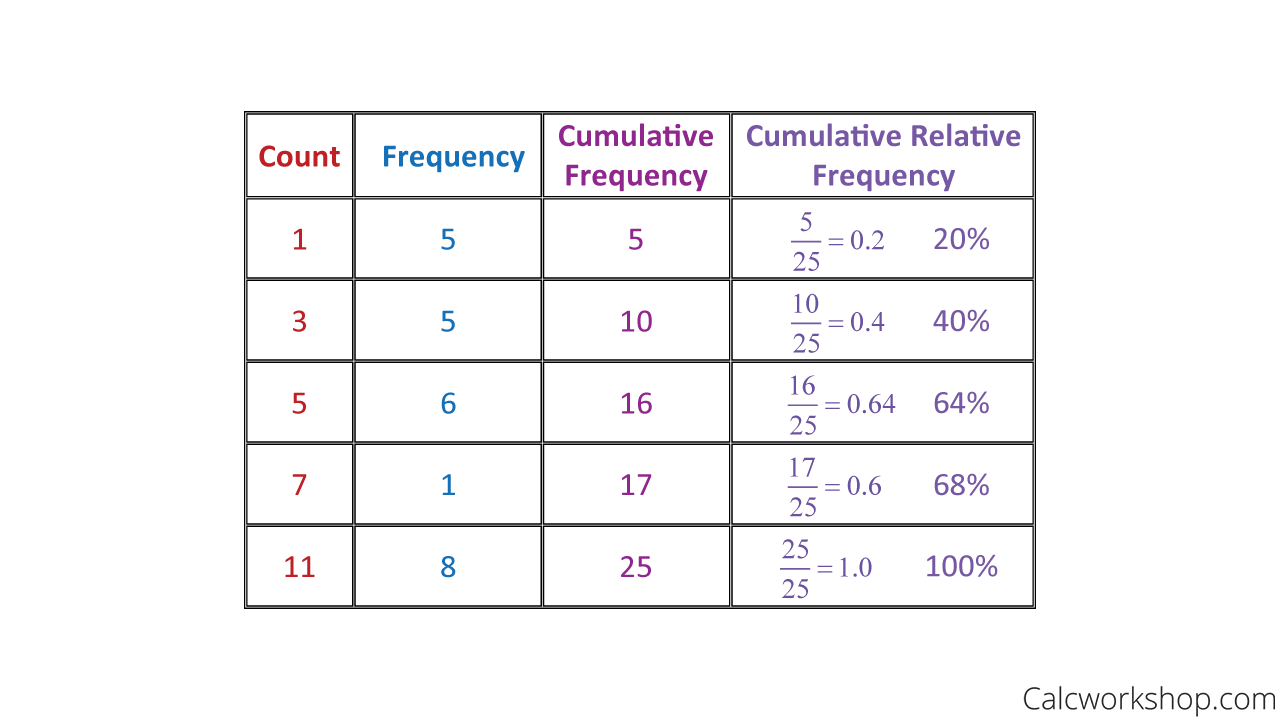
To find the cumulative frequency for any subsequent row, you simply add the current row's frequency (f) to the cumulative frequency (Cf) calculated in the previous row. This is the fundamental rule for understanding How To Get Cumulative Frequency In Statistics.
H4: Step-by-Step Example of Calculation
Imagine you have three class intervals with these frequencies:
- Interval 1 (f = 5)
- Interval 2 (f = 8)
- Interval 3 (f = 12)
Here is how the cumulative frequency calculation works:
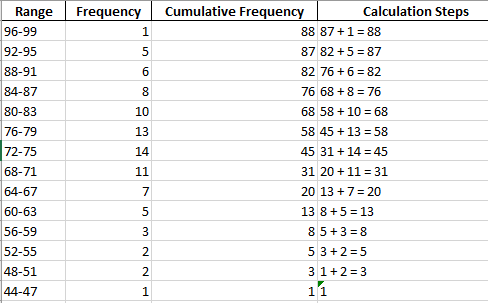
- Row 1: Start with the frequency. Cf = 5.
- Row 2: Take the previous cumulative frequency (5) and add the current frequency (8). Cf = 5 + 8 = 13.
- Row 3: Take the previous cumulative frequency (13) and add the current frequency (12). Cf = 13 + 12 = 25.
The final cumulative frequency (25 in this case) should always equal the total number of observations (N) in your entire dataset. If they do not match, you have made a calculation error and need to double-check your frequencies or your additions.
Interpreting Your Cumulative Frequency Results
Understanding the final result is just as important as the calculation itself. Cumulative frequency provides powerful insights into how data is distributed, especially regarding lower and upper bounds.
When you look at the cumulative frequency corresponding to a specific value or class interval, you are looking at the count of all observations that are less than or equal to the upper limit of that interval.
For instance, if the cumulative frequency for the class interval 60-69 is 45, it means that 45 data points fall within the range up to the upper limit of 69.
Using Cumulative Frequency in Graphical Analysis
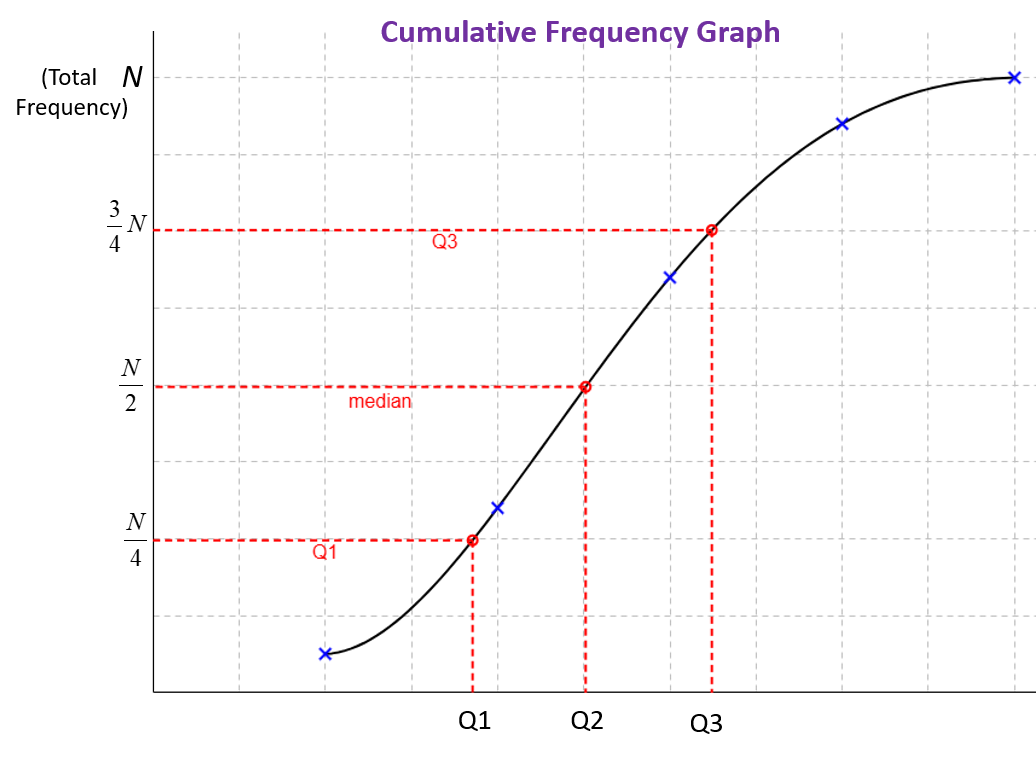
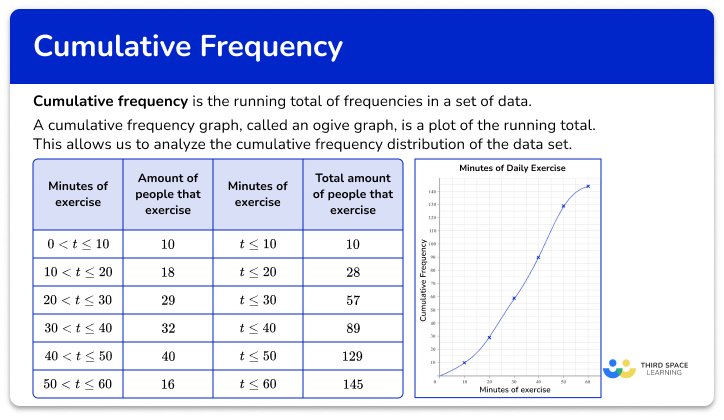
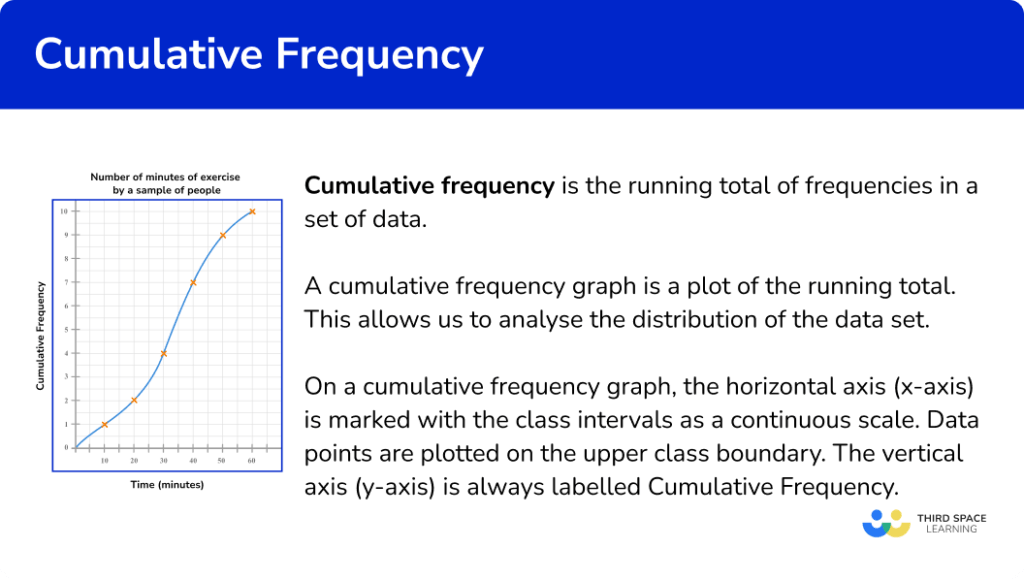
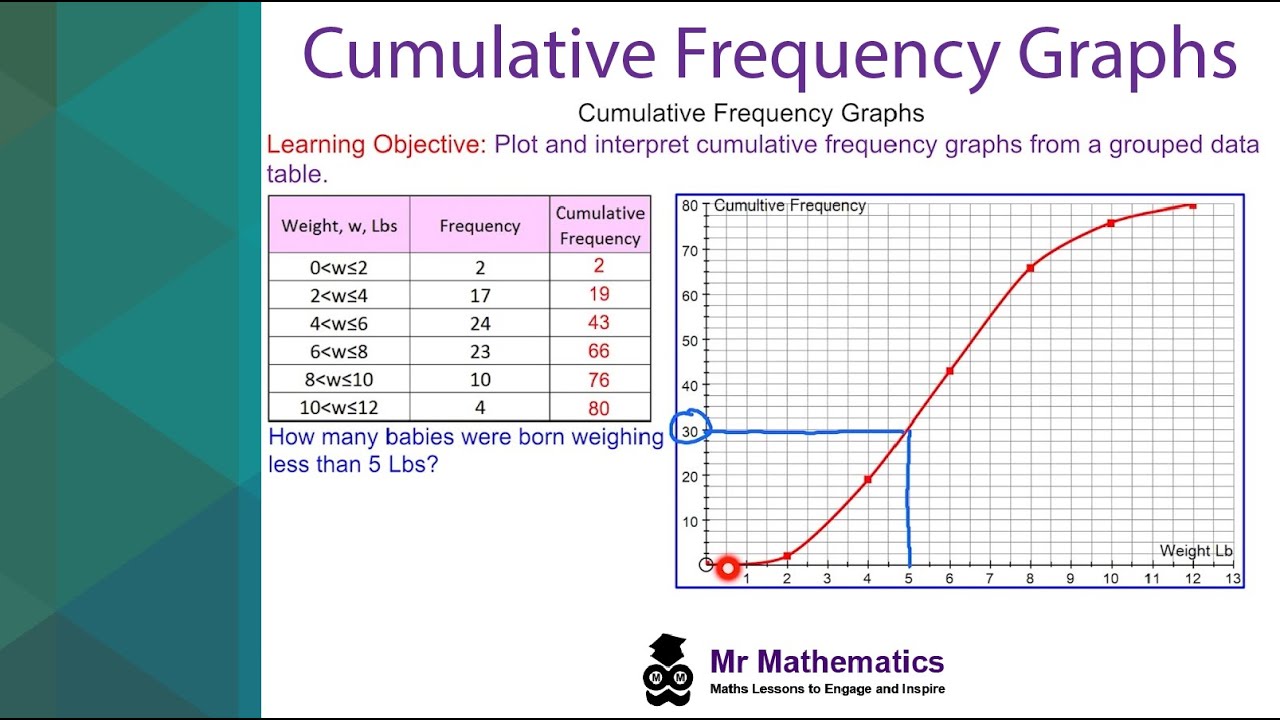
The most common application of cumulative frequency is generating an "ogive" (pronounced oh-jive). The ogive is a line graph plotted using the cumulative frequencies against the upper boundaries of the class intervals. This graph visually represents the distribution and makes it easy to quickly identify the median, quartiles, and any required percentiles of the data set.
If you can successfully calculate the cumulative frequency table, you have already done 90% of the work required for creating a fully functional ogive graph.
Conclusion: Mastering How To Get Cumulative Frequency In Statistics
Calculating cumulative frequency is a fundamental skill in statistics that transforms raw data into meaningful positional information. It is a straightforward process of creating a running total by adding each class frequency to the previous cumulative total.
By correctly organizing your data into a frequency distribution table and applying the simple accumulation rule, you will master How To Get Cumulative Frequency In Statistics. Remember that the final value of your cumulative frequency column must always match your total sample size (N). Keep practicing this technique, and you will find that visualizing and analyzing data distribution becomes much easier!
Frequently Asked Questions (FAQ)
- What is the difference between frequency and cumulative frequency?
- Frequency (f) tells you how many times a single value or class interval appears in the dataset. Cumulative Frequency (Cf) tells you the total count of observations up to and including that specific value or class interval.
- Can cumulative frequency ever decrease?
- No, cumulative frequency can never decrease. Since you are always adding a non-negative count (frequency) to a running total, the cumulative frequency must either increase or stay the same (if the frequency for that row is zero).
- Why do I need to sort the data before calculating cumulative frequency?
- The data must be sorted or grouped by value/interval in ascending order because cumulative frequency relies on a running total. If the order is incorrect, the accumulation will not accurately reflect the number of observations below a certain point.
- What is the final number in the cumulative frequency column supposed to be?
- The final cumulative frequency value must be equal to 'N,' which is the total number of observations or data points in your entire sample. If it doesn't match, recheck your addition or initial frequency counts.
How To Get Cumulative Frequency In Statistics
How To Get Cumulative Frequency In Statistics Wallpapers
Collection of how to get cumulative frequency in statistics wallpapers for your desktop and mobile devices.

Mesmerizing How To Get Cumulative Frequency In Statistics Landscape in 4K
Discover an amazing how to get cumulative frequency in statistics background image, ideal for personalizing your devices with vibrant colors and intricate designs.
Gorgeous How To Get Cumulative Frequency In Statistics Wallpaper for Mobile
This gorgeous how to get cumulative frequency in statistics photo offers a breathtaking view, making it a perfect choice for your next wallpaper.
Amazing How To Get Cumulative Frequency In Statistics Design in HD
Discover an amazing how to get cumulative frequency in statistics background image, ideal for personalizing your devices with vibrant colors and intricate designs.

Serene How To Get Cumulative Frequency In Statistics Image in 4K
Experience the crisp clarity of this stunning how to get cumulative frequency in statistics image, available in high resolution for all your screens.

Detailed How To Get Cumulative Frequency In Statistics Moment Concept
Discover an amazing how to get cumulative frequency in statistics background image, ideal for personalizing your devices with vibrant colors and intricate designs.
Artistic How To Get Cumulative Frequency In Statistics Abstract Art
A captivating how to get cumulative frequency in statistics scene that brings tranquility and beauty to any device.
Mesmerizing How To Get Cumulative Frequency In Statistics Design Collection
Explore this high-quality how to get cumulative frequency in statistics image, perfect for enhancing your desktop or mobile wallpaper.
Lush How To Get Cumulative Frequency In Statistics Photo for Desktop
Immerse yourself in the stunning details of this beautiful how to get cumulative frequency in statistics wallpaper, designed for a captivating visual experience.
Amazing How To Get Cumulative Frequency In Statistics Design Concept
Explore this high-quality how to get cumulative frequency in statistics image, perfect for enhancing your desktop or mobile wallpaper.

Serene How To Get Cumulative Frequency In Statistics Scene Photography
Experience the crisp clarity of this stunning how to get cumulative frequency in statistics image, available in high resolution for all your screens.

Beautiful How To Get Cumulative Frequency In Statistics Picture for Mobile
Transform your screen with this vivid how to get cumulative frequency in statistics artwork, a true masterpiece of digital design.
Stunning How To Get Cumulative Frequency In Statistics Design Collection
This gorgeous how to get cumulative frequency in statistics photo offers a breathtaking view, making it a perfect choice for your next wallpaper.
Dynamic How To Get Cumulative Frequency In Statistics Artwork Art
Find inspiration with this unique how to get cumulative frequency in statistics illustration, crafted to provide a fresh look for your background.
Stunning How To Get Cumulative Frequency In Statistics View in HD
Find inspiration with this unique how to get cumulative frequency in statistics illustration, crafted to provide a fresh look for your background.

Captivating How To Get Cumulative Frequency In Statistics Wallpaper Art
Find inspiration with this unique how to get cumulative frequency in statistics illustration, crafted to provide a fresh look for your background.

Gorgeous How To Get Cumulative Frequency In Statistics Scene Nature
Immerse yourself in the stunning details of this beautiful how to get cumulative frequency in statistics wallpaper, designed for a captivating visual experience.
Captivating How To Get Cumulative Frequency In Statistics Image Nature
Immerse yourself in the stunning details of this beautiful how to get cumulative frequency in statistics wallpaper, designed for a captivating visual experience.

Stunning How To Get Cumulative Frequency In Statistics Artwork Concept
A captivating how to get cumulative frequency in statistics scene that brings tranquility and beauty to any device.
Spectacular How To Get Cumulative Frequency In Statistics Capture for Desktop
A captivating how to get cumulative frequency in statistics scene that brings tranquility and beauty to any device.

Vivid How To Get Cumulative Frequency In Statistics Background Nature
Discover an amazing how to get cumulative frequency in statistics background image, ideal for personalizing your devices with vibrant colors and intricate designs.
Download these how to get cumulative frequency in statistics wallpapers for free and use them on your desktop or mobile devices.